Summary
Alibaba's Qwen Image 2.0, released in February 2026, delivers reliable text in images and native 2048×2048 output with only 7 billion parameters, but still struggles with prompt sensitivity, dense scenes and style range.
- The model has 7 billion parameters versus 20 billion in the previous generation, yet outperforms its predecessor across every major benchmark
- It was trained for infographics, posters, slides, comics and bilingual layouts; the Pro version accepts prompts up to 1,000 tokens, though decorative and hand-lettered type still produce artifacts
- It generates at 2048×2048 natively instead of upscaling, which matters most for print and large-format display
- It ranked first on AI Arena, a blind comparison platform that uses an ELO system
- Weaknesses: strong sensitivity to wording, lost details in crowded scenes, narrower style range than Midjourney and Nano Banana2, and literal reading of idioms outside Mandarin and English
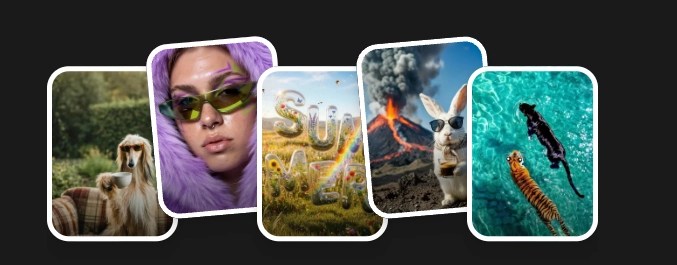 What Are Your Ideas Today?
In February 2026, Alibaba released Qwen Image 2.0 without much fanfare. Seven billion parameters, native 2048×2048 output, and a first-place ranking on AI Arena — the blind evaluation platform where real people vote on real results without knowing which model produced them.
We are exploring what they mean in practice, where the model genuinely delivers, and where it still falls short.
Text in Images Is Finally Reliable
Ask any designer who has used image generation models for client work and they will tell you the same story. The copy on the poster says “Welcоme.” The infographic label reads “SALLE.” The speech bubble in the comic is gibberish that looks vaguely like words.

Models have always treated text as texture — something that should resemble letters without necessarily being them. Alibaba decided to treat it as a first-class feature instead.
Qwen Image 2.0 was specifically trained to handle infographics, posters, presentation slides, comics, and bilingual layouts. The Pro version accepts prompts up to 1,000 tokens, which is less of a prompt and more of a creative brief.
That said, keep expectations calibrated. Decorative typefaces, hand-lettering styles, and heavily stylized typography still produce artifacts. The model is meaningfully better than anything that came before it in this category, but it is not perfect. The ceiling has moved up considerably; the edge cases remain.

A young woman wearing a traditional Chinese hanfu dress in deep red with gold embroidery stands slightly to one side, facing the camera. Behind her is a clean white brick wall. On the wall, in elegant hand-lettered gold calligraphy, the following text is written in full and exactly as shown: “It unifies text-to-image generation and image editing into a single, blazing-fast 7B architecture.” The letters are ornate, golden, evenly spaced, and fully legible. Soft natural lighting. Editorial photography style. High detail, 2K resolution.
Fewer Parameters, Better Output
The previous Qwen generation ran on 20 billion parameters. This one runs on 7 billion. That is a reduction of roughly two-thirds, and the new model outperforms its predecessor across every major benchmark.
This is not a contradiction. It reflects serious work on architecture and training data quality rather than a simple compression pass. The model was not just made smaller, it was made to do more with less.
The practical benefit for anyone calling this through an API is that smaller models are faster and cost less to run. For teams building at scale, that math adds up quickly.
Native 2K Is a Real Distinction
Most competing models generate at a lower resolution and upscale to 2K in post-processing. This generally works, but it leaves traces: softened edges, loss of fine texture, the slightly artificial smoothness that experienced eyes recognize immediately.
Qwen Image 2.0 generates at 2048×2048 natively. The difference shows up in exactly the places where detail matters most — skin texture without the waxy finish, architectural surfaces that hold up under scrutiny, fabrics that read as specific materials rather than generic cloth.
If your output goes to print or large-format display, this is a meaningful technical distinction. If you are generating social thumbnails, the difference is less critical.
What the AI Arena Result Actually Means
Benchmarks measure their own parameters, which is often not the thing you actually care about. AI Arena runs blind comparisons. A real person sees two images generated by anonymous models and picks the one they prefer. No branding, no context, no scoring rubric. Results are aggregated using an ELO system — the same method used in competitive chess and sports rankings.
First place on AI Arena means that people, given no information about what they were looking at, consistently chose Qwen Image 2.0’s output over the competition. That is a meaningful signal for anyone creating content that will be judged by human audiences rather than automated metrics.
Where It Still Falls Short
Prompt sensitivity. The model reacts strongly to exact wording. A reordered adjective or a different comma placement can shift the output significantly. This is manageable with careful prompting, but it means first-attempt reliability depends heavily on how well you specify the request.
Looks really gentle, doesn’t it?

But the English translation of the chinese prompt looks a bit different:

Complex scene composition. Dense scenes with many objects and specific spatial relationships tend to lose details. Ask for a crowded marketplace with ten specific elements and some of those elements will disappear or end up in the wrong place. Directional language (“behind,” “to the left of,” “in front of”) is interpreted loosely.
Style range. Midjourney and Nano Banana2 have built a reputation for reproducing a wide range of artistic aesthetics with high fidelity. Qwen Image 2.0 is narrower in this respect. Certain styles come through well; others feel approximated.
Language nuance in prompts. The model was trained predominantly on English. Idioms, cultural references, and figurative language tend to get taken literally. Mandarin is handled well. For other languages, and for non-literal English, results are less predictable.

First-generation artifacts. The hit rate on usable images from a single generation is above average for this class of model. But the failures, when they happen, are visible. Three arms, misplaced hands, eyes in unexpected locations — the standard list of anatomical errors that every model in this category still produces. Qwen Image 2.0 produces them less often, but still does.
Where All This Lands
Qwen Image 2.0 is a serious technical achievement. Alibaba demonstrated that a smaller model can outperform a larger one given the right training approach, that native high-resolution output is technically achievable, and that human preference evaluations can be won on merit.
The limitations are real. Prompt engineering still matters. Some use cases will be better served by competing models. This is the first generation of a new approach, and first generations have rough edges.
What is clear is that the overall quality floor for image generation keeps rising, and Qwen Image 2.0 raised it again.